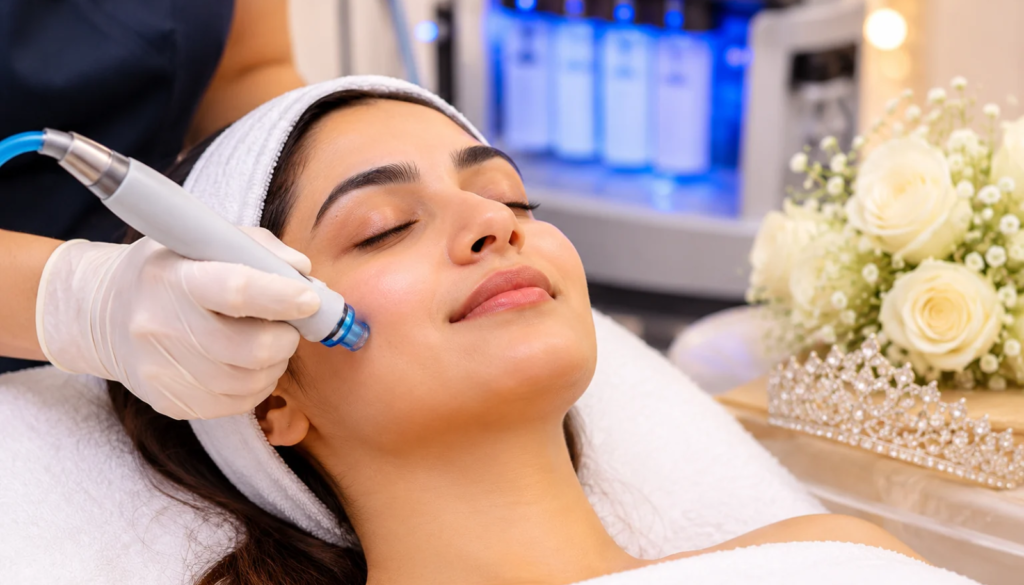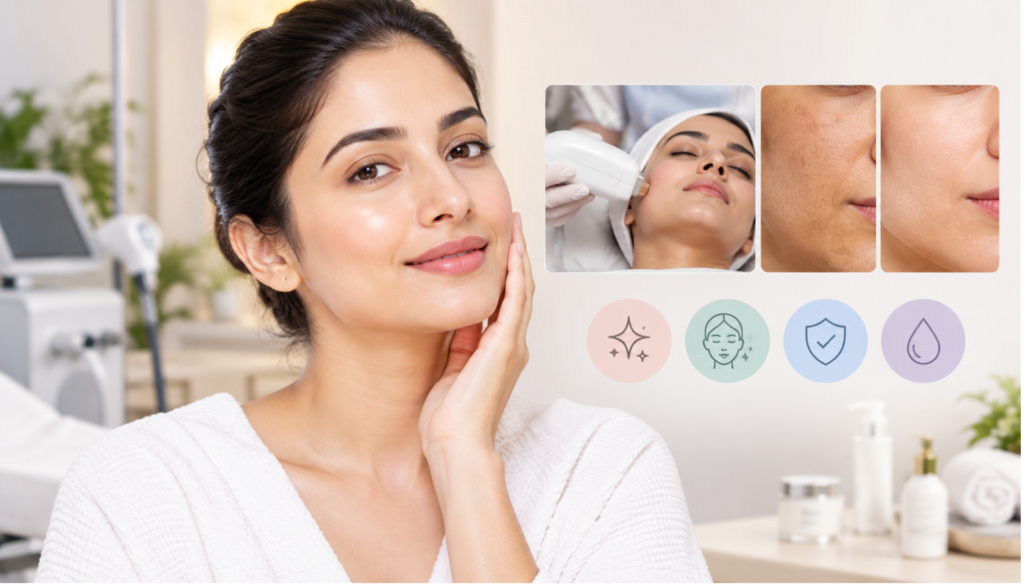
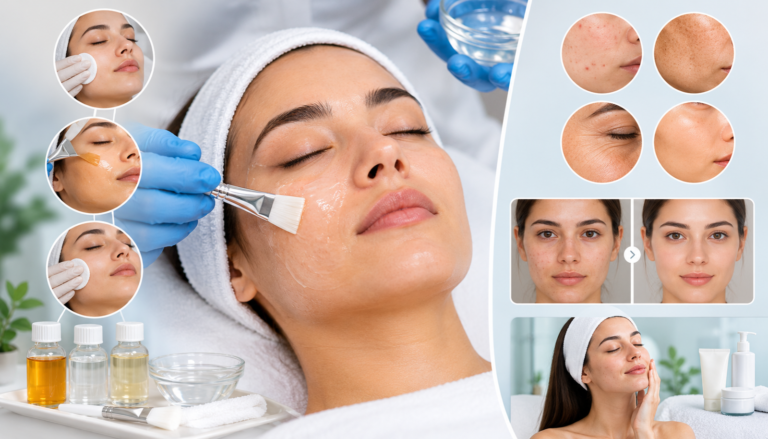
Chemical peel treatment uses a controlled acid solution to remove the top layers of damaged skin. New, smoother skin grows in their place. Doctors use it to improve fine lines, uneven tone, dullness, and some acne marks.
This guide answers a simple question: what is a chemical peel? It also explains the chemical peel procedure, the main peel types, and the recovery steps. It shares practical tips that many general articles skip, such as timing, medicines to pause, and sun care in Mumbai.
What Is Chemical Peel Treatment and How Does It Work?
Chemical peel treatment is a skin procedure in which a doctor applies a mild to strong acid solution to the face. The solution loosens and removes dead and damaged cells. Fresh skin then appears with a better tone and texture.
Many people search for what is chemical peel treatment before they book a visit. The short answer is that it is a controlled form of exfoliation. The depth of the peel decides how strong the effect is. The question what is chemical peel treatment has a simple answer: it is a way to renew the skin.
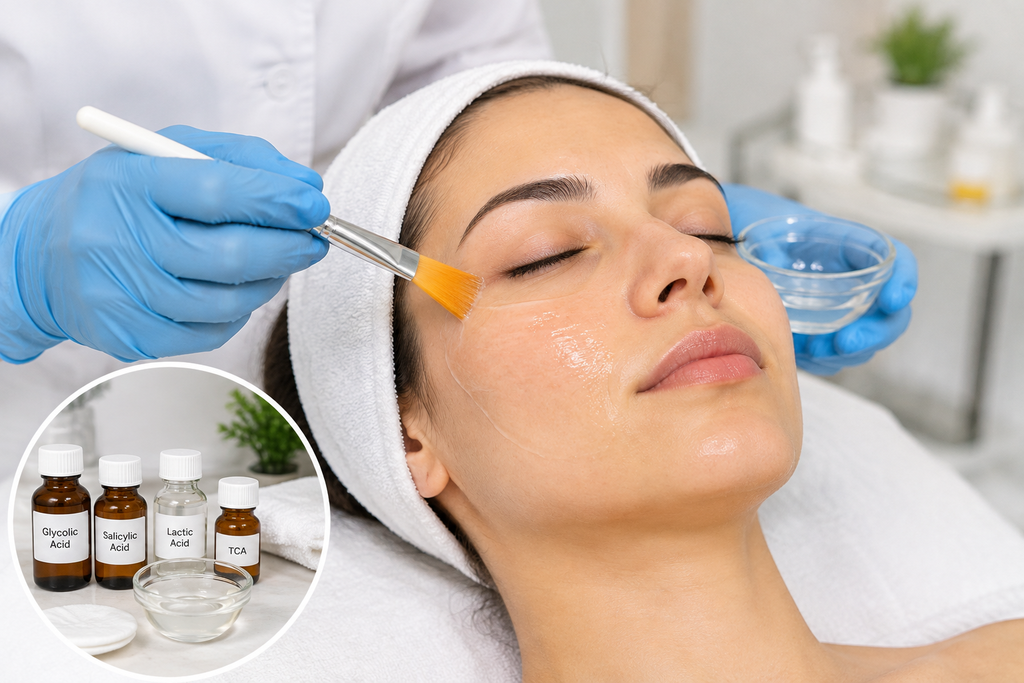
So, what is a chemical peel in practical terms? It is a doctor-guided skin reset, not a simple beauty facial. Common acids include glycolic acid, salicylic acid, lactic acid, and trichloroacetic acid (TCA).
Each acid works in a different way. Glycolic acid suits dull skin, while salicylic acid suits oily and acne-prone skin. TCA works deeper and needs more care.
How Does the Chemical Peel Procedure Work During Chemical Peel Treatment?
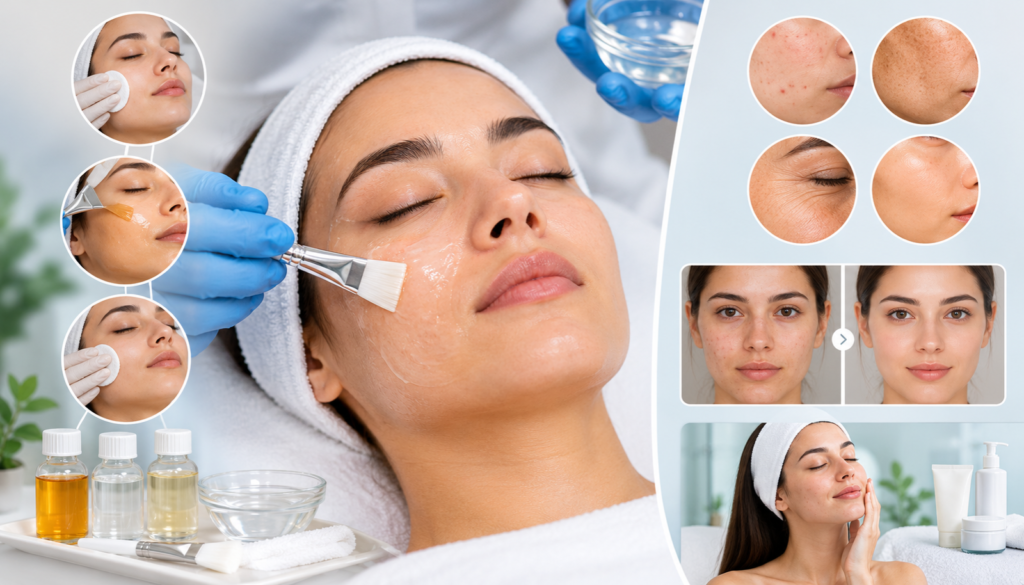
The chemical peel procedure takes about 15 to 45 minutes and follows a fixed order. A doctor checks your skin, cleans the face, applies the peel, and then neutralizes or removes it. Most superficial peels need no anesthesia.
The chemical peel procedure usually follows these steps:
- Skin assessment and medical history review
- Face cleansing and eye protection
- Careful peel application in layers
- Neutralizing or removing the solution
- Soothing cream and sunscreen
Before the visit, the doctor may ask you to pause retinoids, scrubs, and waxing for several days. Follow this advice exactly. Active products can make the skin react too strongly.
A trained dermatologist adjusts the acid, strength, and timing for your skin. You can read more about chemical peel treatment in Mumbai before your visit.
Which Types of Chemical Peel Treatment Are Available?
Doctors use three main types of chemical peel treatment: superficial, medium, and deep. Superficial peels are the gentlest, and deep peels are the strongest. The right type depends on your skin concern and your free time for recovery.
| Peel Type | Common Acids | Best For | Typical Recovery |
| Superficial | Glycolic, salicylic, lactic | Dullness, mild acne, light tone issues | 1 to 3 days of mild flaking |
| Medium | TCA | Fine lines, sun damage, uneven tone | 5 to 7 days of peeling |
| Deep | Phenol | Deep wrinkles, heavy sun damage | 2 weeks or more, with medical supervision |
Many patients choose a deeper chemical peel treatment because they want faster results. This is a common mistake. A series of gentle peels often gives safer progress than one strong peel.
Deep peels need specialist supervision. Doctors do not offer them to everyone.
A chemical peel for wrinkles usually needs a medium peel. A chemical peel for glowing skin usually needs a superficial peel.
Can Chemical Peel Treatment Help With Wrinkles and Glowing Skin?
Yes, chemical peel treatment can soften fine lines and improve glow, but results vary. It cannot remove deep folds or replace surgery. Your skin condition and the peel type decide the outcome.
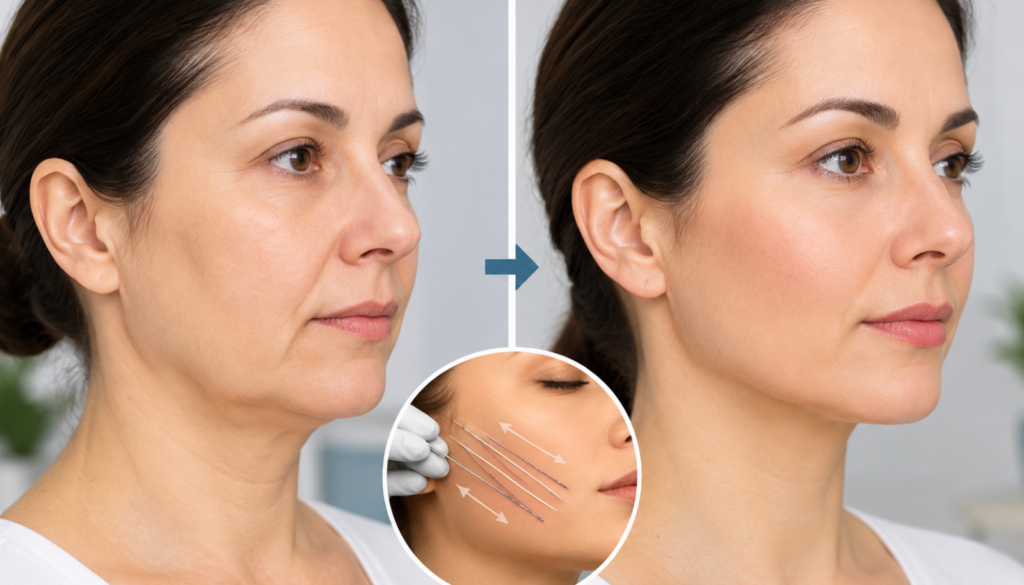
A chemical peel for wrinkles works best on fine lines around the eyes, mouth, and forehead. Medium peels act on these lines better than superficial peels. Deep wrinkles may need other treatments.
A chemical peel for glowing skin is the most common reason people book a visit. Superficial peels remove dull surface cells and make the skin look brighter. The glow often appears after the peeling phase ends.
Realistic benefits of a chemical peel for glowing skin include:
- Smoother skin texture
- More even skin tone
- Softer fine lines
- Fewer clogged pores
- Lighter acne marks over a series of sessions
Chemical peel treatment results are never guaranteed. Chemical peel for wrinkles and glowing skin both need patience, because the best change appears over several sessions. A doctor can explain what is realistic for your skin.
What Is the Recovery Timeline After Chemical Peel Treatment?
Recovery depends on peel depth. Superficial peels need one to three days, medium peels need five to seven days, and deep peels need two weeks or more. Redness, dryness, and flaking are normal and fade as new skin forms.
Once you know what is a chemical peel, recovery planning becomes easier. Do not pick or pull the peeling skin. Picking can cause scars and dark marks. Let the skin shed on its own.
Moisturize often and use a gentle cleanser. Apply sunscreen with SPF 30 or higher every morning, and reapply every few hours. A chemical peel for glowing skin only lasts if you protect the skin from sun. In Mumbai, strong sun and humidity can irritate fresh skin. Stay indoors during peak sun hours and wear a hat.
Avoid heavy sweating, swimming, and hot showers for the first few days. Also avoid scrubs, retinoids, and acids until your doctor says they are safe.
Plan your chemical peel treatment timing well. Book your session at least two to four weeks before a wedding or a big event. This gap gives the skin time to heal.
What Are the Risks, and Who Should Avoid Chemical Peel Treatment?
Chemical peel treatment is safe for most healthy adults when a trained doctor performs it. Risks include irritation, burns, pigmentation changes, infection, and scarring. Deeper peels carry a higher risk. Remember what is chemical peel treatment: a medical procedure with real risks.
Darker skin tones face a higher risk of dark patches after a peel. For this reason, doctors choose gentler acids and test the skin first.
You should delay or avoid a peel if you have:
- An active skin infection or cold sore
- Open wounds or sunburn
- Recent isotretinoin use
- Pregnancy or breastfeeding
- A history of keloid scars
Before chemical peel treatment, tell your doctor about your medicines and past skin reactions. The doctor can then pick the safest peel for you. Anyone who asks what is a chemical peel should also ask about its risks. You can consult a dermatologist for chemical peel treatment at Derma Pro Center in Mumbai.
What Else Should You Know About Chemical Peel Treatment?
These short answers cover the most common questions, including what is chemical peel treatment.
1. What is a chemical peel?
A chemical peel is a doctor-applied acid solution that removes damaged skin layers and reveals fresher skin.
2. Is chemical peel treatment suitable for all skin types?
It suits many skin types, but doctors adjust the peel for darker or sensitive skin.
3. How long does chemical peel recovery take?
Recovery takes one to three days for light peels and two weeks or more for deeper peels.
4. Can chemical peels help with wrinkles?
A chemical peel for wrinkles softens fine lines but does not remove deep folds.
5. What precautions are needed after a chemical peel?
Use sunscreen daily, moisturize, avoid picking, and follow your doctor’s instructions.
Follow Dermapro Center on Instagram for skincare advice, and real patient transformations.
Final Verdict
Chemical peel treatment works best with a clear goal, a trained doctor, and good aftercare. Book a consultation to learn which peel fits your skin. Discuss chemical peel for wrinkles and chemical peel for glowing skin with your doctor, and ask about the chemical peel procedure, the recovery time, and the risks.